What the Fuck Is Morally Wrong with Bullshit? From Burger King Bullshit to Social Corrosion

Difficulty: What the fuck

Burger King bullshit

So I was at Burger King today, and after waiting forever for my food, I couldn’t help but mutter, “This is bullshit.” Then I recalled how I had been defining “bullshit” in the last few days:

Bullshit is (a) speech or deed that simulates adherence to standards of reasoning or truth without a genuine concern to get things right, or (b) speech or deed that displays indifference to any relevant standards of representational correctness.

And then I thought: how does this apply to “Burger King bullshit”? I pondered this question for hours and finally had what seemed like a eureka moment:

Burger King bullshit is (a) speech or deed that simulates adherence to standards of Burger King without a genuine concern to get things right, or (b) speech or deed that displays indifference to any relevant standards of Burger King correctness.

Obviously, this is not bullshit in quite the same sense as propaganda, bad-faith punditry, or empty philosophical posturing. And if it turns out that we could use my definition of bullshit as a template for calling anything that annoys or frustrates us “bullshit,” then the definition would be too ad hoc. As Karl Popper put it, “A theory that explains everything explains nothing.”

But, you might ask: so what if we could easily plug in whatever we want to explain Burger King bullshit?

Well, then dentist-office bullshit, airport-security bullshit, thermodynamics bullshit, etc., become mere rhetorical punching bags. We would find it difficult to explain what differentiates bullshit from incompetence, dysfunction, insincerity, institutional hollowness, hypocrisy, bad service, fraud, laziness, ordinary failure, and a whole lot of shit that annoys or frustrates us—and risk contributing to philosophical discourse a definition that is, well, bullshit.

The ethics of bullshit

That said, Burger King bullshit and representational, or “classic,” bullshit do have something in common. That is, both suggest that the bullshitter simulates adherence to some standard while not actually trying to get things right in accordance with that standard, or that the bullshitter is indifferent to some standard of correctness.

This might explain why we get upset when we are on the receiving end of bullshit: not only has the bullshitter failed to uphold some standard, but she either (a) pretends to uphold it or (b) doesn’t even try to pretend. And that, I will argue, is a moral failure.

First, recall this passage from On Bullshit, where Harry Frankfurt discusses a verse from Longfellow:

“In the elder days of art
Builders wrought with greatest care
Each minute and unseen part,
For the Gods are everywhere.”

This means to say that people in the old days didn’t cut corners. They paid attention to details in their craftsmanship even if such details would normally be invisible, or else it would bother their conscience. “[O]ne might perhaps also say,” Frankfurt states, “there was no bullshit.”

The trouble is that not every failure of craftsmanship is a moral failure. A bad carpenter may simply be incompetent. A lazy Burger King employee may be rude, apathetic, or badly trained. So if bullshit were nothing more than failure to meet a standard, that would not yet explain why classic bullshit is morally distinctive.

The moral issue appears when we move into representational practices—assertion, inquiry, reporting, argument, testimony, and the like. In these practices, one does not merely produce an object or perform a service. One presents oneself as answerable to norms of truth, evidence, and getting things right. And that changes the moral landscape.

When a bullshitter merely simulates adherence to those norms, she does more than perform badly. She exploits a shared practice while refusing to be governed by the standards that make the practice possible. She takes the benefits of looking serious, informed, careful, or rational without submitting to the discipline that those appearances are supposed to signal.

That is morally objectionable for at least three reasons.

First, it is a kind of disrespect. The bullshitter treats her audience not as fellow participants in a truth-/reason-directed practice, but as people to be managed, impressed, manipulated, or pacified.

Second, it is unfair. The bullshitter wants the social authority that comes with sounding as if one is trying to get things right, without taking on the burden of actually doing so.

Third, it is corrosive. Bullshit makes it harder for all of us to distinguish genuine inquiry from empty performance, and so it degrades the very practices on which intellectual and civic life depend.

Note that within our framework, all three reasons for why bullshit is morally objectionable can also be used to explain what is wrong with lying. Lying is also disrespectful and manipulative. Lying also gives the liar an unfair epistemic advantage. Lying is also corrosive to any dialogue in which we might partake.

So why the difference in moral judgment?

Why do we treat bullshitters more leniently than we treat liars?

This points to a distinction between Frankfurt’s moral argument against bullshit and mine. Rather than attributing the bullshitter’s moral failure to disrespect, unfairness, and corrosion, Frankfurt argues that bullshitting is a greater enemy to truth, and that it is thus more reprehensible than lying, which requires the liar to at least respect truth.

Truth, admittedly, seems like a loftier ideal for philosophers. But Frankfurt also says:

“The problem of understanding why our attitude toward bullshit is generally more benign than our attitude toward lying is an important one, which I shall leave as an exercise for the reader.”

We can now try to answer that question.

In response to Frankfurt, I will argue that the reason our attitude toward bullshit tends to be more benign than our attitude toward lying is not that bullshit is harmless, but that lying typically involves a more direct epistemic and interpersonal wrong. A lie aims to replace the truth with what the liar takes to be false. Bullshit, by contrast, often works less by directly overturning the truth than by cheapening, bypassing, or exploiting the norms that are supposed to guide truth-/reason-directed practice.

Recall that during his grand jury testimony in 1998, Bill Clinton parsed his earlier statement that “there is no improper relationship” with Monica Lewinsky by saying, “That depends on what the meaning of the word ‘is’ is.” By quibbling over the word “is,” Clinton was not seriously trying to get things right. He was performing fidelity to standards of reasoning and truth while using those standards as a shield. That is a plausible case of insincere bullshit.

But suppose Clinton had said, instead, “There is and never was an improper relationship with Monica Lewinsky.” This would be an instance of lying.

Now further assume that Clinton had achieved his goal of getting away with deception in both cases—bullshitting and lying—and that in both cases there was not enough evidence to hold him legally accountable.

The Clinton example gives us a useful way into the broader question of why lying is often judged more harshly than bullshitting.

Epistemic harm

First, bullshit is often easier to see through than a successful lie. In Clinton’s case, his evasiveness may frustrate us, but it need not destroy our grasp of the underlying truth. A successful lie, by contrast, more straightforwardly aims to replace the truth in the audience’s mind with what the speaker takes to be false. If Clinton had instead lied and succeeded in fooling us, we would have been even more furious at him for distorting our very perception of reality—namely, that he did have an affair with Lewinsky.

Disrespect and unfairness

Second, lying is usually more sharply interpersonal. The liar intentionally tries to get you to believe what she thinks is false. She directly recruits your trust against you. This is much more manipulative and disrespectful than bullshitting, which tends to involve merely putting on a show, as Clinton did. Lying is also more sharply unfair. The liar aims to replace the truth, in the hearer’s mind, with what the liar takes to be false. Bullshitting is often more like reckless disregard: it may not aim to destroy the truth outright, but it is willing to endanger the norms and practices by which truth is ordinarily tracked.

Clinton’s bullshit manipulates by performance and evasion; a lie would have manipulated more directly, by asking the public to accept as true what he himself took to be false.

Bullshit can be sincere; lying can’t

Third, a liar must, on some level, know that she is trying to get another person to accept what she herself takes to be false. That structure makes the wrong especially legible: the liar is betraying the audience’s trust on purpose. Bullshit can have that structure too, but it need not. A bullshitter may be vain, careless, tribal, self-deceived, or carried away by appearances. She may honestly believe that she is being serious and responsible. That does not excuse the bullshit. But it can make it seem less vicious, because the wrong is not always one of straightforward intentional betrayal.

I do not mean to suggest that Clinton’s own bullshit was sincere. The point is rather that bullshit as a category leaves room for sincerity in a way that lying does not. That helps explain why the moral profile of bullshit is often less stark than that of lying.

So this, I think, is part of why we often judge liars more harshly than bullshitters. Lying is necessarily insincere. Bullshit need not be. Still, bullshit remains morally objectionable because even when it is sincere, it exploits, cheapens, or corrodes the norms that make truth-/reason-directed practices possible.

A brief note on corrosiveness

Sharp readers may have noticed that I mostly set aside the corrosiveness point in the previous arguments. I did so because it is unclear whether bullshitting is more or less corrosive to civic discourse than lying. That said, I’ll take a stab at it.

When Frankfurt condemned bullshitting as more morally reprehensible than lying, his argument was that bullshitting, in virtue of the bullshitter’s indifference to truth, is a greater enemy to truth. That’s a nice idea, but how does that fit within my framework?

My take is that, while bullshitting is a less direct epistemic threat than lying, it may be the more insidious one. The bullshitter is like a reckless driver: she does not have to aim at truth in order to endanger it. The liar is more like a driver who deliberately targets a pedestrian: the threat is more direct, more intentional, and therefore more immediately legible as a wrong. Our outrage at premeditated murder tends to be stronger than our outrage at reckless endangerment or negligent killing. We are therefore often quicker to condemn the liar than we are to condemn the bullshitter. But that does not settle the deeper question of long-run social danger.

A liar, like a killer driver, is more likely to be punished severely. A bullshitter, like a careless driver, more easily gets dismissed as merely sloppy, frustrating, or irresponsible. But that does not mean bullshit is any less dangerous for society. Once we cultivate a culture of bullshit, the carelessness proliferates. We do not want to live in a society where certain pedestrians are deliberately targeted, but neither do we want to live in one where any pedestrian may become the hapless victim of recklessness. By the same token, we do not want liars killing the truth. But neither do we want truth to be unintentionally run over by bullshitters.

None of this shows that bullshit is less dangerous overall than lying. My point so far has only been that lying is usually judged more harshly because its wrong is more direct and more legible. The long-run corrosive effects of bullshit may, in some contexts, be just as serious—or worse.

So there may be no easy ranking here. Lying is often the more direct wrong; bullshit may be the more culturally pervasive one. Either way, a society that tolerates either too easily is in serious trouble.
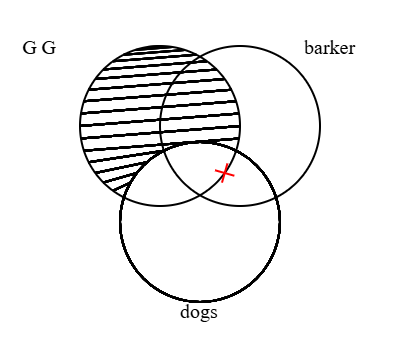
What the Fuck Bullshit Is: Genuine Concern, Standards, and Getting Things Right

Difficulty: What the fuck

This is my third post in a series on bullshit, so if you haven’t read post 1 and post 2, you should probably do that first.

In those two posts, I revised Harry Frankfurt’s definition of bullshit and argued that what matters is not just whether someone is sincere, but whether they have a genuine concern to get things right.

More specifically, I argued that bullshit is:

(a) speech or deed that simulates adherence to standards of reasoning or truth without a genuine concern to get things right, or (b) speech or deed that displays indifference to any relevant standards of representational correctness.

And by “genuine concern,” I mean:

concern that is properly guided by the standards that must be respected, given the practice in which one is engaged.

But that immediately raises a harder question:

Who the hell are you to tell me what standards I must respect?

Fair enough. That is exactly the question this post is about.

What I want to argue is something that resembles, but falls short of, what philosophers call a constitutivist view. Don’t worry if that word sounds annoying. I’ll explain it without the usual philosophical fog machine.

First, what the fuck is constitutivism?

Constitutivism is a view about where certain norms come from, especially norms about what counts as doing something correctly.

The core idea is:

Some standards apply to you because they are built into what it is to engage in a certain activity at all.

Take chess.

If you move a bishop like a rook, someone can say, “That’s not allowed.”

And if you reply, “Why the hell should I follow that rule?”

The natural answer is:

“Because if you don’t, you’re not really playing chess.”

The rule is not just some random command imposed from outside. It is part of what makes chess chess.

Or say that you are building a house, but you don’t care whether it keeps the rain out. You don’t care whether it stands up. You don’t care whether anyone can live in it.

At some point, we stop saying:

“That’s a bad house.”

and start saying:

“That’s not really a house at all.”

Again, the relevant standard is not optional in the ordinary sense. A house is supposed to provide shelter. That standard is constitutive of the activity.

So the constitutivist-style thought is simple:

some standards are internal to a practice because without them, the practice is no longer the kind of thing it is.

The famous objection

Here is the obvious objection, associated with people like David Enoch.

You say:

“If you’re playing chess, you should move the pieces according to the rules.”

And the critic says:

“Fine. But why should I play chess at all?”

That is a serious objection. If your answer is only, “Well, because those are the rules,” then you have not really answered the deeper question.

And this brings us back to my view of bullshit and genuine concern.

My “constitutivist-lite” stance

My main idea is this:

To engage in a practice at all is to be subject to certain standards that partly constitute what that practice is.

Notice what I am not saying.

  • I am not saying that you morally ought, full stop, to engage in that practice.
  • I am not saying that some philosopher-king gets to issue divine decrees about what everyone must care about.
  • I am not saying that every mistake kicks you out of the practice.

What I am saying is narrower:

If you are purporting to engage in a practice, then you are purporting to be answerable to the standards that make that practice intelligible as the kind of thing it is.

So yes, of course someone can ask, “Why engage in the practice at all?” But that is a different question. My aim here is not to justify participation. It is to clarify what participation amounts to.

If you move chess pieces randomly, you are not playing chess badly. You are arguably not playing chess at all.

If you present something as an argument while not being guided at all by whether the premises support the conclusion, then at some point you are no longer merely arguing badly. You are performing the surface appearance of argument.

And that is where the notion of genuine concern comes in.

Badly doing X vs. not really doing X at all

Now we need to be careful here. If every mistake meant you were not really doing the thing, then almost nobody would count as doing anything.

A bad chess player is still playing chess. A weak writer is still writing. A sloppy arguer is still arguing.

So my claim is not that any failure to meet a standard disqualifies you from the practice. That would be ridiculous.

The point is that some failures are much deeper than ordinary incompetence.

Sometimes a person is trying, however imperfectly, to be guided by the standards of the practice. In that case, they are doing the thing badly.

But sometimes, a person might be misguided by other standards. The standards that are supposed to guide her are, deliberately or not, being used as decoration, camouflage, or theater. The person invokes the right standards, gestures at them, maybe even believes she is adhering to them—but in practice, those standards are not doing any governing work.

That is a different kind of failure.

And it is that deeper kind of failure that matters for bullshit.

So when I say that someone may “not really be engaging in argumentation as a practice,” I do not mean that every bad argument is fake argument. I mean that where the relevant standards are used as mere props rather than as constraints, the performance becomes hollow.

At that point, we are no longer dealing with mere incompetence. We are dealing with simulation, indifference, or both.

Genuine concern, sincerity, and being properly guided

This is why sincerity is not enough.

You can sincerely believe that you are being careful. You can sincerely feel that you care about truth, or evidence, or accuracy. You can sincerely think you are “following the argument where it leads.”

And yet your activity may still fail to be genuinely guided by the standards you claim to respect.

That is the point of the distinction I drew in the previous post:

sincerity is a mental state, whereas genuineness is a matter of being properly guided.

To be genuinely concerned to get things right is not merely to feel concern. It is to have your activity actually constrained and directed by the standards internal to the practice you are engaged in.

So if someone reasons in a way that systematically filters out counterevidence, cherry-picks support, and treats objections as things to swat away rather than seriously consider, that person may still be utterly sincere. But sincerity alone does not make the concern genuine.

Why not?

Because the relevant standards are not actually guiding the inquiry. They are being selectively invoked, distorted, or bypassed.

And when that happens in representational practices—contexts where one is supposed to be getting things right—that is precisely where bullshit arises.

“Who decides?”

At this point, someone may still push back:

“Okay, but who decides what counts as being ‘properly guided’?”

Good question.

The answer is not: me, as your philosopher overlord.

Nor is the answer: whatever standards happen to be socially fashionable this week.

Rather, the point is that once a practice has standards built into it, those standards are what make success and failure within that practice intelligible in the first place.

If the practice is argumentation, then things like logical support, evidential responsibility, and responsiveness to objection are not optional decorative extras. They are part of what makes argumentation argumentation.

If the practice is assertion, then accuracy and truth-related norms matter because assertion purports to represent how things are.

If the practice is inquiry, then openness to correction and a willingness to let evidence constrain belief are not just nice personality traits. They are part of what inquiry is.

So I am not imposing alien standards from outside the practice. I am pointing to standards without which the practice would lose its identity.

That is why my view is “constitutivist-lite.” I do not need the much stronger claim that these standards generate unconditional reasons for everyone, everywhere, no matter what. I only need the weaker claim that if you are purporting to engage in a practice, then those standards come with the territory.

What this has to do with bullshit

Now we can tie this back to bullshit more directly.

Recall the layman-friendly version of my definition from the earlier posts:

Bullshit is pretending to play by the rules while not actually giving a shit about them—or simply not caring about them at all.

The current post lets us say more clearly what the “rules” are supposed to be.

They are not just random social expectations. They are the standards internal to the relevant representational practice: the standards that partly constitute what it is to be arguing, asserting, inquiring, explaining, reporting, interpreting, and so on.

So when someone simulates argument without letting argumentative standards constrain the activity, that is bullshit.

When someone presents themselves as reporting facts while treating truth and accuracy as optional window dressing, that is bullshit.

When someone performs inquiry while using evidence as decoration after already deciding what they want to conclude, that is bullshit.

And importantly, this is why bullshit can coexist with sincerity. A person may not be consciously faking anything. They may honestly think they care. But if the standards are not actually doing any governing work, then the concern on display is sincere at best—not genuine.

A concrete example

Suppose a pundit says she is “just following the evidence.” She cites studies, uses the language of careful inquiry, and presents herself as someone who is simply being rational.

But in practice, the evidence functions only as set decoration.

She ignores inconvenient data, treats obvious objections as beneath notice, quotes experts only when they help her side, and starts with the conclusion she wants before “reasoning” backward to support it.

She may still be sincere. She may genuinely feel offended if you accuse her of dishonesty. She may even think of herself as serious and rigorous.

But if the activity is not actually being guided by the standards of inquiry she is invoking, then her concern is not genuine.

She is wearing the costume of inquiry without letting inquiry govern the performance.

That is bullshit.

The takeaway

So when I say that genuine concern is:

concern that is properly guided by the standards that must be respected, given the practice in which one is engaged,

I am not making some grand moral pronouncement about what everyone should care about, period.

I am making a narrower claim about what it is to count as genuinely engaging in a representational practice at all.

You do not have to do X.

But if you are purporting to do X—and X is a practice with standards built into it—then you must at least try to get X right by being guided by those standards.

Otherwise, you may not merely be doing X badly.

You may be doing something hollower than that: simulating the practice while consciously or unconsciously rejecting the standards that constrain you.

And in representational contexts, that is exactly the territory of bullshit.

This is also why bullshit can thrive in philosophy itself. A philosopher or graduate student may use the language of rigor, raise objections, cite famous names, and perform all the outer rituals of serious inquiry. They may well be sincere: they may honestly believe that they care about clarity, truth, and philosophical rigor. But sincerity is not enough. If career incentives, status signaling, tribal loyalty, or the mere desire to publish—not clarity, logical support, responsiveness to criticism, and a genuine openness to getting things right—are what is actually guiding the activity, then what we are seeing is not merely weak philosophy. It is, at least in part, bullshit philosophical inquiry: the simulation of philosophical seriousness without the corresponding discipline that gives that seriousness its point.

Next time, we will begin exploring the moral implications of bullshit.

What the Hell Bullshit Is: Addressing Potential Objections

Difficulty: What the hell

In my previous post on bullshit, I argued for a revision of Harry Frankfurt’s definition of bullshit, redefining it as follows:

Bullshit is (a) speech or deed that simulates adherence to standards of reasoning or truth without a genuine concern to get things right, or (b) speech or deed that displays indifference to any relevant standards of correctness.

(Note to nitpicky readers: the disjunction, i.e., the “or” statement, here should not be read as allowing arbitrary separation of reasoning and truth, but as reflecting the different ways in which representational practices may be governed across contexts.)

I also formulated a more layman-friendly, if less precise, version of my definition:

Bullshit is pretending to play by the rules while not actually giving a shit about them—or simply not caring about them at all

What followed was a discussion on salient types of bullshit which Frankfurt’s definition struggles to capture, but which, I argued, my revised definition handles better.

In what follows, I will first offer a caveat on defining bullshit before turning to objections and counterexamples to my revised definition.

A caveat on definitions

So first, there’s something that Frankfurt states in his work On Bullshit that we need to keep in mind:

“Any suggestion about what conditions are logically both necessary and sufficient for the constitution of bullshit is bound to be somewhat arbitrary. For one thing, the expression bullshit is often employed quite loosely—simply as a generic term of abuse, with no very specific literal meaning. For another, the phenomenon itself is so vast and amorphous that no crisp and perspicuous analysis of its concept can avoid being Procrustean.”

Here, Frankfurt briefly argues that because bullshit is such a messy concept, no definition of bullshit can be perfect, and any attempt to construct an ultra-precise definition would end up being Procrustean (overly rigid). As such, there will likely be overgeneration (some instances of non-bullshit might be captured) and undergeneration (some instances of bullshit might not be captured) no matter what definition we come up with.

That said, my aim is to minimize, as much as I can, issues of overgeneration and undergeneration, both of which are problematic on Frankfurt’s original definition. The goal is not to provide a perfect revised definition, but one that handles our messy conception of bullshit a little more adroitly. To that end, I will further refine my revised definition along the way.

Objections and counterexamples

Overgeneration

Case 1: The psychopathic serial killer

Consider a psychopathic serial killer who murders without any regard for moral or social norms. On my definition, such a person would seem to satisfy condition (b): she is indifferent to any relevant standards of correctness. But it would be highly inappropriate to describe her actions as “bullshit.” Murder is not bullshit—it is something far worse.

This suggests that my definition may overgenerate: it risks classifying extreme forms of wrongdoing as bullshit, when in fact the concept seems better suited to a narrower class of intellectual or expressive failures.

Case 2: The reckless driver

A reckless driver has no regard for traffic laws and social norms. This follows (b) because plausibly, the driver “displays indifference to any relevant standards of correctness.” However, it would not be apt to say that the “driver is bullshitting” or that “her driving is bullshit.”

This is another case of potential overgeneration.

Case 3: The bored vandal

On impulse, a teenage vandal smashes a window because she’s bored. The objection here is: “Sure, her behavior follows (b) because that’s a “deed that displays indifference to any relevant standards of correctness.” But it’s more apt to call it an “act of destruction” rather than “bullshit.”

Again, potential overgeneration.

Case 4: The apathetic employee

An apathetic employee doesn’t care about doing a good job, ignores standards, and does just the bare minimum. This follows (b) (an indifference to any relevant standards of correctness), but it feels strange to say that the “employee is bullshitting.”

This is the last of the cases of potential overgeneration.

Addressing overgeneration objections

This is where we can refine my definition of bullshit, which, if you recall, states:

Bullshit is (a) speech or deed that simulates adherence to standards of reasoning or truth without a genuine concern to get things right, or (b) speech or deed that displays indifference to any relevant standards of correctness.

And because all the aforementioned objections to potential overgeneration target (b), we will have to home in on (b)’s wording, specifically for “relevant.” So what are “relevant standards of correctness”? I stipulate:

A relevant standard of correctness is one that is representational.

If you want to specify that in my definition, we can word it as:

Bullshit is (a) speech or deed that simulates adherence to standards of reasoning or truth without a genuine concern to get things right, or (b) speech or deed that displays indifference to any relevant standards of representational correctness.

This addresses cases 1 to 3.

For case 1 (the psychopathic serial killer), murder is not bullshit because it is not relevant to standards of representational correctness. Sure, there are behavioral norms and laws, and these are standards of correctness, but they do not concern matters of representation–such as representing some claim as true or false, or reasoning as fallacious or not, or a question as sincere or insincere.

Instead, these norms and laws govern matters like public safety and social mores.

And the same could be said about case 2 (the reckless driver) and case 3 (the bored vandal), both of which do not concern the relevant issue of representation.

Now I argue that case 4 (the apathetic employee) is in fact a case of bullshit. While it might seem strange to say that “the employee is bullshitting,” it’s quite intuitive to say that any work she produces is “bullshit” due to her indifference to “any relevant standards of representational correctness.”

Undergeneration

Case 5: The sincere-but-self-deceived bullshitter

Say we have a charismatic speaker (think wellness guru, motivational influencer) who is sincerely convinced of what she’s saying, cares about getting things right (in their own mind), presents confident, sweeping claims with “reasons.” But she ignores counterevidence, cherry-picks anecdotes, and overstates conclusions.

This is clearly a case of bullshit. However, although it might (initially) seem to be neither (a) speech or deed that simulates adherence to standards of reasoning or truth without a genuine concern to get things right, nor (b) speech or deed that displays indifference to any relevant standards of representational correctness, my definition might fail to capture it.

Case 6: The self-deceptive ideologue

A partisan argues with apparent structure and confidence, genuinely believes her claims, and wants to be right. But she systematically filters evidence, rationalizes away disconfirming data, and uses arguments instrumentally (without noticing). Our intuition is to call this “bullshit.”

The objection here is that although there seems to be a “concern to get things right,” there seems to be a distorted epistemic (knowledge) practice that my definition might not capture. So like case 5, this is potentially a problem of undergeneration.

Case 7: The therapeutic “truth”

A therapist/coach says:

“You’re enough exactly as you are. Everything happens for a reason.”

Her advice is not offered as literal truth. It’s aimed at helping, not accuracy. And the speaker may even know it’s not strictly true.

This serves as a potential counterexample of undergeneration to my definition because it’s not clearly (a), as it might not initially appear to simulate, or pretend to be, adherence to standards of reasoning or truth. Moreover, there does seem to be a genuine concern to get things right. And it’s not (b): the therapist/coach is not indifferent, as there is a different aim (well-being) she cares about. Nevertheless, our intuition is that while some people might hear this as helpful, others might appropriately call it “feel-good bullshit.”

We can clarify this case further by distinguishing between two kinds of therapeutic speech. If a statement is clearly offered as comfort, without any pretense of representing how the world actually is, then it may fall outside the scope of bullshit altogether. However, when such statements are presented in the form of claims about reality—e.g., “everything happens for a reason”—simulating adherence to standards of reasoning or truth but without a genuine concern for whether they are getting things right, they can plausibly be regarded as a kind of “feel-good bullshit.”

Case 8: The PR spin that believes itself

Now consider a corporate spokesperson who uses polished talking points, believes the narrative, and wants to be accurate within that frame. But her language is evasive and selectively framed to mislead.

This is an instance that might not follow (a), as there is no obvious or deliberate simulation of adherence to standards of truth and reasoning. And neither does it follow (b), since the spokesperson is not indifferent, and she cares about being “correct” in the approved frame. Still, this is obviously bullshit.

Addressing undergeneration objections

To address these undergeneration objections, we must home in on the word “genuine.”

Bullshit is (a) speech or deed that simulates adherence to standards of reasoning or truth without a genuine concern to get things right, or (b) speech or deed that displays indifference to any relevant standards of representational correctness.

Note that I used the word “genuine,” not “sincere,” because while these two concepts might often be related, they are not identical.

A manufacturer of boutique handbag knockoffs can be sincerely focused on her craft (as might be the case for many higher-quality, Chinese-made knockoffs), but that doesn’t mean the knockoffs are genuine. These handbags, then, can, in an extended sense, be called “bullshit products.”

Conversely, an original product might be genuine, but that doesn’t necessarily mean that the manufacturer sincerely gave a shit about them. It thus aligns with my definition of bullshit to say these products are not bullshit.

More philosophically, sincerity is a mental state. Genuineness is a mind-independent matter of being properly guided. In these cases of potential undergeneration, the bullshitters’ concern is sincere but not genuine, because it is not properly guided by the standards they must respect, given the practice they are engaged in.

So, in case 5, the wellness guru might sincerely be concerned to get things right, but because her concern to get things right is deeply misguided, she does not have a genuine concern.

The same goes for case 6 (the self-deceptive ideologue), case 7 (the therapeutic “truth”), and case 8 (the PR spin that believes itself), in which the bullshitters are sincerely concerned to get things right. Their concern is not genuine because it is not properly guided by the standards that they must respect, given the practice they are engaged in.

The takeaway

So based on these last two posts, what can we conclude about my definition of bullshit?

First, it avoids labeling non-bullshit, such as the work of some serious anti-realists, as bullshit.

Second, it captures salient instances of bullshit that Frankfurt’s definition struggles to include, such as bullshit questions and deeds.

Lastly, my definition avoids some potential counterexamples and objections regarding both overgeneration and undergeneration.

In sum, to accomplish this, we must not restrict our definition of bullshit to a concern with just truth, as Frankfurt did. And we should also carefully explain not just what “bullshit” means, but what certain terms in our definition mean.

So much for what bullshit is. Next time, I’ll explain what the hell a “genuine” concern actually is, and why that’s not just empty philosophical jargon.

What the Hell Bullshit Is: Revising Frankfurt’s Definition

Difficulty: What the hell

In his work On Bullshit, Harry Frankfurt famously defined bullshit as, roughly, a product of a speaker who is indifferent to the truth. Note that bullshitting is different from lying. A liar cannot be indifferent to the truth, because she must first pay attention to what she thinks is true–and then avoid it.

Lying vs. bullshitting

Here is an easy example of the difference between lying and bullshitting:

If a student is writing a paper on, say, Hitler, and she knows that Hitler was born on April 20, she would be lying if she attempted to deceive her teacher about that fact. But if she’s doing a last-minute job and has to fill 10 pages with words, and so she changes the font and margin size and writes a shit ton of whatever, then she would be bullshitting. That’s not because she’s lying–she’s not. It’s because she’s indifferent to whether what she writes is true, but pretends to care.

But Frankfurt’s definition of “bullshit” is not perfect (and to be fair, he neither claimed nor argued that it was). What prompted me to revise his definition is that at the very end of On Bullshit, he accuses “anti-realists” in academic philosophy of bullshitting or, at the very least, of making it dangerously easier for bullshit to spread.

His idea seems to be that because anti-realists reject the existence of certain objective truths, they must then be indifferent to truth. Since to those anti-realists, there is no such thing as truth, the only “truth” they can care about is their sincerity, which is bullshit, Frankfurt says. Doing my best to understand him, I think what he means is:

If there are no objective truths on your view, you can’t (and thus don’t) care about the truth.

There are no objective truths on your view.

Therefore, you can’t (and thus don’t) care about the truth.

What about sincerity? I’m not sure. But my guess is that he means that these sincerity folks take this stance: “Since truth is gone, the only thing that matters is expressing what’s inside me.”

And from here, they say shit like, “I’m just expressing myself.” No concern for truth, in Frankfurt’s sense, seems to be doing any work there.

But I have to respond: WTF? Frankfurt seems to slide between two things:

(A) Bullshit (his definition)

Speaker is indifferent to truth

(B) Anti-realism

Truth is not objective / not available / not truth-apt

And (A) and (B) are very different. For instance, anti-realism includes a philosophical area called non-cognitivism, and non-cognitivists–who reject that moral statements (like “stealing is wrong”) are true or false–often:

  • think hard about meaning, use, and justification
  • are not just saying “whatever works”
  • and are often more careful than ordinary speakers

Many prominent non-cognitivists are clearly not bullshitters. So to clarify our understanding of what bullshit is–and is not–we need to refine its definition.

The revised definition

I’ve revised Frankfurt’s definition as follows:

Bullshit is (a) speech or deed that simulates adherence to standards of reasoning or truth without a genuine concern to get things right, or (b) speech or deed that displays indifference to any relevant standards of correctness.

In short, it’s about:

pretending to play by the rules while not actually giving a shit about them—or simply not caring about them at all

What unifies (a) and (b) is a lack of genuine constraint: in both cases, the speaker or agent is not genuinely guided by the standards that are supposed to govern the activity.

Following (a), this definition allows us to say that intellectually serious non-cognitivists (and other anti-realists) are not bullshitters, even though they may seem indifferent to the truth of certain things, such as moral truths, that they believe not to exist. If these anti-realists are playing by the rules of reasoning and getting things right, even though they don’t believe in the existence of certain objective truths, then they can’t be said to be bullshitters.

Note that the revised definition says “speech or deed,” not just “speech.” And how, you might ask, could a deed be bullshit?

Say that you’re in a philosophy seminar where some graduate students pretend to understand things by stroking their chins and nodding their heads. The thing is, these students don’t care about learning things. They are merely simulating adherence to the relevant standards of correctness, and they are not genuinely concerned with getting things right. Specifically, with their body language, they pretend to play by the rules (of philosophical thinking) without giving a shit about the rules.

That’s plausibly an instance of bullshit.

Or consider tagging on a dumpster that looks like “street art” or a “statement.” If the point is just visibility or ego—no concern for craft, meaning, or whether any implied claim is true—then it’s bullshit: it imitates the norms of artistic discourse without being guided by them.

Following (b), this revised definition also captures cases of bullshit dumpster tagging done “just for kicks.” If the teenagers vandalized the dumpster without regard to any standard at all–they didn’t even pretend to follow the rules–then we can plausibly say, with exasperation, “That’s bullshit.”

Interestingly, this revised definition allows us to capture not just deeds, but also statements that are not truth-apt (neither true nor false)—an expansion that Frankfurt’s original definition struggles with. After all, if bullshit is defined purely in terms of indifference to truth, then it becomes unclear how to classify questions, expressions, or other non-truth-apt utterances.

But these can clearly be bullshit. Consider a philosopher asking questions she has no interest in answering, or a child who keeps asking “why?” not out of curiosity, but just to annoy you. These statements are neither true nor false—but they still display a lack of concern for getting anything right.

The revised definition captures this more naturally.

In other words, bullshit can be about truth, but it’s often also about whether you’re actually trying to get anything right at all.

In the next post, I will address potential objections to my revised definition of bullshit.

The Experience Machine Part 3: Methodological Challenges, the Expertise Objection, and Other Considerations

Difficulty: What the fuck

This is Part 3 of a series on Robert Nozick’s Experience Machine Thought Experiment (EMTE), so make sure you first read Part 1 and Part 2. As I noted earlier, the philosophical discussion here is a simplified and slightly profane version of the Internet Encyclopedia of Philosophy’s article “The Experience Machine.”

So just when you thought things were complicated enough, there are more objections to Nozick’s EMTE argument. Here, we cover methodological challenges, the expertise objection, the experience pill thought experiment (an offshoot of EMTE), and newer variations of EMTE, before we conclude with a brief note on what the hell all this suggests.

Methodological challenges

First, what the hell does “methodological” mean? Here, “methodology” means the way a thought experiment or psychological study was set up. So, if it’s okay to sacrifice a bit of linguistic precision: methodological challenges are simply objections to how shit is done.

The first methodological challenge is raised against the previously mentioned psychological studies, which aim to see how participants make decisions when confronted with EMTE or EMTE-like scenarios. Specifically, the objection is that these empirical studies are not representative of the general population: they tested only students in Anglo-Saxon universities, so their results are not enough for us to conclude anything about how the rest of the English-speaking world would make decisions under EMTE, let alone how most people, globally, would make such decisions.

The flaw in this objection is that it misses the point. The goal of EMTE, REM, and stranger NSQ is not to understand what humans think in general—that’s a sociological or anthropological thing. Instead, the goal is to challenge how philosophers’ use of intuitions (like “I wouldn’t plug in”) to argue that we value reality, or that hedonism is false, might be unreliable because of our biases. In other words, we don’t need to know what the whole human race thinks in order to weaken Nozick’s abductive argument. It’s enough that these studies produce inconsistent results so that the old line of thought—”Oh, an overwhelming majority of people wouldn’t plug in, so they must value reality, and therefore hedonism is false”—starts to look much shakier.

The second methodological challenge is raised against the fact that these psychological EMTE studies did not set up hypothetical scenarios as real decision-making situations, but as outlandish scenarios: wouldn’t it be better, the objection goes, if the studies had made participants make decisions about more “real-world” situations rather than some fantastical sci-fi stuff?

The answer is “probably no.” In fact, the fact that EMTE is so different from real life may actually be a strength of the setup, not a weakness. Why? Because we are even more likely to exercise biased decision making when we are confronted with real-world situations. So the point of EMTE and its variations is not to see how we’d act if we were actually standing in front of a machine. The point is to examine our judgments in a setting that may be less driven by immediate emotions and pressures, and therefore better suited to philosophical reflection.

The expertise objection

The expertise objection basically says: “Hey, we should be using only academic philosophers’ responses in experimental philosophy because they are ‘better’ at thinking through thought experiments.” And if we believe that, we’d also believe that non-philosophers’ responses to these thought experiments are not meaningful for philosophy. This is a common challenge not only to EMTE, but to experimental philosophy in general.

The flaw with this objection is that empirical evidence shows that, for both EMTE and experimental philosophy in general, philosophers are not way better at thinking things through. When asked to respond to different versions of EMTE, philosophers gave inconsistent answers, and their answers were only slightly more consistent than those of non-philosophers. In fact, philosophers are around equally susceptible to imaginative failures as non-philosophers; those two populations disregard stipulations of EMTE at approximately the same rate.

Further, if philosophers really want to claim their status as the hot shits of thinking, then, if we are to remain democratic about things, the burden of proof lies on philosophers: philosophers must prove that they are better thinkers than non-philosophers, not the other way around. But the evidence, as noted before, does not support that claim.

Indeed, philosophers might be susceptible to other biases coming from within academic philosophy itself. For instance, given that the mainstream position in philosophy is that one should not enter EM, if a philosopher participant does not specialize in EMTE and thus relies on more muddled thinking, then that philosopher might more easily default to the anti-plug-in answer simply because that is what philosophers are “supposed” to say.

The experience pill

Then there’s the experience pill thought experiment, an offshoot of EMTE: would you take a pill that enhances your pleasure, but that does not distort reality like psychedelic drugs do? With this modification, pro-pleasure decisions increased from 29% to 53%. This might be because the experience pill thought experiment presents a much more familiar scenario and does not require pro-pleasure decision makers to abandon reality.

This points to an important difference between EM and the experience pill: while interesting, the experience pill shifts the question. It is no longer really about reality versus pleasure. Rather, it helps us analyze whether people prefer affective appropriateness—that is, having feelings that fit the situation—or pleasure.

A related issue: as is the case for much of experimental psychology and philosophy, changes in how you word a thought experiment often change participants’ decisions.

For instance, if I told you to “watch this video of a ‘car crash'” and then asked you to estimate how fast the car was going, you’d probably be more inclined to say that the car was going much faster than if I had worded the question using “car accident” or “fender bender.”

So, because EMTE is just as susceptible to inconsistent responses due to changes in wording, and the wording of EMTE varies widely across studies, it’s difficult to know just how much of the inconsistencies are due to mere wording variations rather than to the deeper biases we’ve already discussed.

New EMTEs

In the past two decades, philosophers have come up with new versions of EMTE so that a new and stronger argument can be made against hedonism. Specifically, one version of EMTE attempts to eliminate worries that EM would malfunction (imaginative resistance) and the status quo bias. In this version, you are asked to decide between two lives:

(1) Life A is “pleasant, rich, full, autonomously chosen, involves writing a great novel, making important scientific discoveries, as well as virtues such as courage, wittiness, and love.”

(2) Life B is identical to Life A except for the fact that B is lived inside EM.

This is called the experientially identical lifetime comparison.

The argument goes that this new version of EMTE isolates the variable that actually matters: our relationship to reality. By conducting the thought experiment this way, we can more easily see whether people care about reality. And because it seems that most people would not want to live Life B (the life in EM), this suggests that we do care about reality, which pushes the argument closer to the conclusion that reality might be an intrinsic prudential value.

Rach Cosker-Rowland, in her 2017 paper “Our Intuitions about the Experience Machine,” presented a version of EMTE where the participant decides which of two hedonically equal lives a stranger should choose. But the IEP article this post is based on (following Buscicchi) claims that Rowland’s study contains a “macroscopic” methodological mistake that “severely undermines the significance of Rowland’s study.” The alleged mistake is that she did not provide participants with the option of answering that the two lives have equal value.

And then there’s Shelly Kagan’s deceived businessman thought experiment, which, though far less famous in philosophy, is considered by some within philosophy circles to provide the strongest case against hedonism, partly because it doesn’t require participants to imagine a life of virtual reality. Here it goes:

Deceived businessman thought experiment

Imagine that in life A, a successful businessman lives a happy life: his family loves him; his community and colleagues respect him.

In life B, the businessman lives an equally happy and pleasurable life, but he is completely deceived: though everyone around him acts the same way, they do so for their personal gain.

Hedonism would hold that these two lives are equal in value, but our intuition is that life A is better than life B.

But of course there are objections. Some philosophers argue that our intuition in favor of life A is being driven by moral considerations rather than purely prudential ones. We value life A more because, unlike life B, it contributes to the world. But again, moral questions are irrelevant and violate the stipulations of the thought experiment, which instructs us to consider only prudential (the “what’s good for me”) reasons.

Another possible flaw of this thought experiment is the freebie problem. First, it is irrational to have 100% confidence in the truth of hedonism. So if we are less than 100% sure that hedonism is correct, the rational decision is to prefer life A, which has a greater-than-0% chance of providing a prudentially more valuable life, since it gives us the freebie of life without all that deception. (And if we think back to Rowland’s study, which did not provide participants with the option of answering that the two lives are equally valuable, we see how forced dichotomies like that are even less helpful for tracking whether we value reality.)

Also, the original EMTE is arguably stronger than the deceived businessman thought experiment because the former requires participants to sacrifice one of two values on a much greater scale: to live a fake life in EMTE is not just to live a life in which you are deceived by others; you’d have to go for full-blown virtual reality for the rest of your life. And if you chose to live a real life, that would mean giving up a huge amount of pleasure that you could otherwise have had. By requiring participants to make great sacrifices like these, EMTE allows us to more clearly see what participants actually value. And compared to the original EMTE, the sacrifices required in the deceived businessman thought experiment are tiny.

Lastly, Kelly Inglis asks us to imagine, in her 2021 paper “The Universal Pure Pleasure Machine: Suicide or Nirvana?”, a universal pure pleasure machine (UPPM) that gives every sentient being in the world a constant heroin-like bliss. Then she asked her participants whether this is “a good future that we should desire to achieve?”, to which only 5.3% of participants responded positively. Inglis concluded from these results that UPPM can disprove hedonism, but not all philosophers are that confident about its implications. For one thing, moral judgments tend to be universal (for example, everyone should not commit murder). For another, UPPM might still make us susceptible to imaginative failures: people might disregard the stipulations and see the machine, which has no virtual reality, as boring (imaginative resistance), or go beyond the stipulations and think that its constant heroin-like high is disgusting (overactive imagination).

So WTF is the conclusion?

This is where I pick, more or less arbitrarily, what I take to be the most salient points of this series on EMTE:

Nozick’s EMTE went through two major stages. It began with the publication of Anarchy, State, and Utopia in 1974. Up until around 2010, an overwhelming majority of philosophers accepted EMTE as support for a knock-down argument against hedonism. Then, beginning in roughly the 2010s, a shit ton of philosophers came up with objections that attempt to weaken EMTE, making us question whether EMTE provides a good argument against hedonism at all. Our biases might have affected our judgments, the scenario might be too far-fetched, and our intuitions might not be tracking value as cleanly as people once thought.

This second phase is then marked by philosophers who devised different variants of EMTE, like Kagan’s deceived businessman thought experiment, in their attempt to revive EMTE’s goal of disproving hedonism.

So where does that leave us? The experience machine used to look like a decisive argument against hedonism. Now it looks much more like a messy intuition pump, one that reveals as much about our psychological biases and philosophical methods as it does about what actually makes life go well.

At this point, the debate is no longer just about whether hedonism is true. It’s also about whether our intuitions, especially about weird, sci-fi scenarios, are reliable enough to settle philosophical questions in the first place.

And that’s probably the most important lesson of all this. EMTE is still interesting as hell. It may still pressure hedonism in serious ways. But it is no longer the philosophical slam dunk that many people once took it to be.

The Experience Machine Part 2: Now We Poke (A Lot Of) Holes

Difficulty: What the fuck

This is Part 2 of a series on Robert Nozick’s Experience Machine Thought Experiment (EMTE), so you might want to read Part 1 first. This series is a simplified, slightly profane version of the Internet Encyclopedia of Philosophy’s article “The Experience Machine.”

Now things get more complicated. We will backtrack a little and look at some of Nozick’s stipulations for EMTE and see if he’s cheating dialectically. We’ll then look at a few objections to the abductive interpretation of his argument.

Nozick’s stipulations

The stipulations: Nozick tells us to set aside questions like “What is reality?” and “How can we know it”? The first question is what philosophers call a metaphysical question; that is, it deals with what things are on a fundamental level. The second question is an epistemic (knowledge) question: how do we know that something is true? How do we know that life outside EM is any more real than life inside EM?

On to the first question: If there is no such thing as reality because all reality is is mental states, stuff that goes on in my head only, then EMTE is pointless: life inside and outside EM would be equally virtual and “fake.”

And about the epistemic question: René Descartes famously advanced the Evil Demon problem to argue for a view called global skepticism: How can I know that I’m not dreaming? How can I know that I’m not a madman, and my “hands” are, in reality, two deformed pumpkins or some other crazy shit? How can I know that anything I perceive is real at all?

If global skepticism (or a more local skepticism that targets EMTE) might be true, then without Nozick’s stipulation to set aside the epistemic question, EMTE would also be pointless: how could we say that the “virtual” world of EM is more, or less, real than the world outside EM?

Lastly, there is the contextual stipulation: Nozick says we should set aside the question of context when we think about EMTE. For instance, if a possible context is that life outside the EM is torturous and unbearable, that might make us decide that plugging into EM is preferable. Nozick tells us to set the contextual question aside and assume that the pleasures we experience outside EM are what the average Joe experiences, so, nowhere near super pleasurable, but also nowhere near unbearable.

Is Nozick cheating?

So is Nozick cheating here?

Well… maybe. But not in a stupid way.

Let’s look at what he’s doing. He tells us to ignore:

  • metaphysical questions (what reality really is)
  • epistemic questions (how we know what’s real)
  • contextual factors (like whether real life is miserable)

That’s a lot to set aside.

So one reaction is: “Hold on, aren’t those exactly the kinds of things that might affect my decision?”

For example, suppose:

  • there is no meaningful difference between “real” and “virtual” experience
  • or we can never know which one we’re in
  • or real life is absolutely terrible

In those cases, plugging into the machine suddenly looks a lot more appealing.

So by ruling out those possibilities, Nozick might look like he’s stacking the deck, designing the thought experiment so that we’re more likely to say, “No, I wouldn’t plug in.”

But here’s the other side.

If we don’t set those questions aside, the whole thought experiment collapses.

If we start worrying about whether reality exists, or whether we can know anything at all, then we’re no longer evaluating hedonism; we’re doing skepticism and metaphysics.

And if we allow extreme contexts, like a life of constant torture, then of course we might choose the machine. But that doesn’t show that pleasure is the only thing that matters. It just shows that sometimes pleasure outweighs everything else.

So Nozick’s stipulations aren’t obviously cheating. They might just be a way of isolating the variable he cares about:

Does pleasure alone determine how well our lives go?

Still, the worry remains. If a thought experiment works only after you strip away enough complications, you might wonder whether it’s telling us something deep, or just guiding us toward a pre-loaded intuition.

The abductive argument, revisited

Now that we got that out of the way, let’s revisit the abductive interpretation of Nozick’s argument:

What’s the best explanation for the fact that many people care about reality, not just pleasurable experiences? One possible answer is that reality itself has intrinsic value.

The question we now focus on is whether “reality itself has intrinsic value” really is the best explanation for why many people care about reality. There are at least three possible sources that make us question the abductive argument: the hedonistic bias, imaginative failures, and the status quo bias.

Hedonistic bias

The hedonistic bias is the most speculative of these three potential biases. Really, it’s controversial as hell, because its core claim is:

You think the reason you don’t want to plug into EM is that you value not just pleasure, but also reality. But actually, all your desires, including the desire not to plug in, are still best explained by the fact that what ultimately drives them is pleasure.

Even more bluntly:

You don’t want to plug into EM not because you value reality, but because you unconsciously believe that reality would get you more pleasure than EM would.

Speculative and controversial as that claim might be, if it’s possible that the hedonistic bias might be true, then it’s possible that Nozick’s EMTE does not, contrary to what many philosophers in the 1990s believed, provide a knock-down argument against hedonism.

Sharon Hewitt shares similar views, arguing, in her 2010 paper “What Do Our Intuitions about the Experience Machine Really Tell Us about Hedonism?,” that it’s not enough to merely stipulate that our practical hedonistic reasons for not plugging in to EM are irrelevant; we must also “fill in the concrete details that would make them irrelevant.” In other words, you can’t just tell people to ignore their practical concerns; you have to show why those concerns don’t actually matter. Further, our intuitions about EM might not be reliable indicators of what is intrinsically valuable: rather than telling us about what truly matters, our intuitions about EM might just be telling us something about how our brain is wired.

Or to flesh it out a bit more:

  1. Thought experiments target gut reactions: we’re trying to see what we intuitively prefer.
  2. But those reactions are “pre-reflective”: we didn’t think it through, we just reacted.
  3. The problem is that we don’t really know why we reacted that way.
  4. So our reactions are not reliable evidence of what actually has value.

Imaginative failures

Let’s move on to imaginative failures. This is another source of bias, which can be divided into two separate confounding factors: imaginative resistance and overactive imagination.

Imaginative resistance

Empirical evidence shows that imaginative resistance, namely, the phenomenon whereby people disregard the stipulations of a thought experiment, is an actual problem when people decide whether they would want to plug into EM.

In his 2014 paper “Nozick’s Experience Machine Is Dead, Long Live the Experience Machine!,” Dan Weijers found that 34% of the participants who did not want to plug into EM were affected by imaginative resistance, disregarding some stipulations of EMTE by worrying about things like whether EM would malfunction, even though Nozick had explicitly stipulated that EM would never malfunction and would provide a perfectly blissful experience.

(This is where you might pause and say, “Oh, those people don’t know how a thought experiment works. You can’t disregard stipulations; that’s the whole point of a thought experiment!” But then again, even philosophers make that mistake at times. The philosopher Ben Bramble, in his 2016 paper The Experience Machine, ignored Nozick’s stipulation that EM provides a perfect simulation: Bramble argued that artificial intelligence is too primitive and that it thus cannot possibly give us a convincing simulation of loving someone and being loved in return. But with recent advances in AI, of course that argument sounds stupid, in hindsight.)

Overactive imagination

Then there’s the problem of overactive imagination, which, according to Weijers’ study, happened for 10% of people who didn’t want to plug into EM. People who have an overactive imagination when thinking about EMTE might be biased against plugging in due to reasons not stipulated by EMTE. For instance, if they’ve watched The Matrix one too many times, they might say, “Oh, no thanks. I don’t want to plug in because I don’t want to be enslaved by aliens.” This, clearly, goes beyond what EM stipulates.

Also, considering that a whopping 46% of anti-plug-in philosophers and 39% of anti-plug-in laypeople were biased by at least one of these two imaginative failures, it’s quite possible that EMTE is simply too far-fetched for us to reliably conclude anything about what we actually value. In other words, our judgments about extreme scenarios like this might be less reliable than we think.

a. Memory’s erasure

Now here’s another complication of possible imaginative failure, particularly one of imaginative resistance: Bramble argues that another reason people might not want to plug into EM is that doing so forces EM to erase some of our memories, making it seem like we would die if we plug in. And since most people don’t want to die, the threat of death might be their reason that they wouldn’t plug in.

If this is hard to wrap your head around, it might be easier to understand what Bramble is saying by thinking of the TV series Severance (if you’ve watched it), in which employees working at a company undergo a “severance” procedure that not only erases their memories of their lives once they enter the workplace, but also makes them forget, once they’ve entered, that they underwent the procedure at all. So if, hypothetically, an employee were to enter the workplace and never come back to the “real world,” the only place they can regain memories of life outside work, then their non-working identities would, in a sense, be dead.

In his 2012 paper “What’s Wrong with the Experience Machine?,” Christopher Belshaw raises an even stronger objection: for EM to work as intended, it would require not just some memory erasure, but invasive memory erasure. Since EMTE stipulates that you wouldn’t remember that you plugged yourself in, for the pleasures to be meaningful in EM, scientists would have to recreate your identity for the pleasurable experiences to be realistic enough.

At this point, the IEP article accuses Bramble’s and Belshaw’s arguments of being victims of imaginative resistance themselves. That is, although EMTE doesn’t explicitly stipulate that identity would not be erased, nowhere does it insinuate that your identity would be erased. In EMTE, identity preservation is implicitly assumed, so by disregarding this implied stipulation, Bramble and Belshaw might be suffering from imaginative resistance themselves.

b. Moral concerns

Moral, as opposed to prudential, concerns are also stipulated as irrelevant in EMTE, though people disregard these stipulations and decide not to plug in anyway. This, again, is a case of imaginative resistance.

For instance, Weijers reported that a participant said that “I can’t [plug in] because I have responsibilities to others,” and Guido Löhr, in his 2018 paper “The Experience Machine and the Expertise Defense,” wrote that anti-plug-in philosophers stated, “I cannot ignore my husband and son,” “I cannot ignore the dependents,” and “Gf[girlfriend] would be sad.”

But EMTE stipulates that we should ignore moral concerns and think only of prudential reasons, that is, reasons for why something is good for me. So this disregard for this stipulation shows just how both laypeople’s and philosophers’ seemingly muddled thinking might render conclusions about what we value unreliable.

And imagine this: if someone told you to disregard moral concerns in a case of, say, sexual violence, would you be able to do so? Probably not. In short, the fact that someone stipulates the rules doesn’t mean you’ll follow the rules.

So what does all of this suggest? It suggests that all our crappy imaginative failures might be a big reason that most of us choose not to plug in. If, on the other hand, we were not affected by any of these biases, then our strong intuition against plugging in might weaken, or at least become less reliable as evidence. That would weaken Nozick’s argument that hedonism is false.

Status quo bias

Lastly, we come to the status quo bias, which means that we humans have a tendency to abide by the adage “when in doubt, do nothing,” especially when faced with complex decision making. We see this happen when people vote for an incumbent politician or decide not to trade in a car. And some studies have exposed just how powerful the status quo bias is during EMTE-like decision making.

Take, for example, the reverse experience machine thought experiment (REM), where participants are asked whether they would want to unplug from EM if they were already living in EM. Most people’s answers: no. Don’t unplug.

And then there’s the “stranger No Status Quo” (stranger NSQ) scenario, which attempts to remove the status quo bias from REM and see how people would respond. The stranger NSQ scenario is based on the idea that the more detached we are from the subject of a thought experiment, the more rational, and thus less biased, we would be. So, researchers asked people to make a decision for a hypothetical stranger: should the stranger, having spent 50% of his or her life in EM, be unplugged and enter reality? Given this scenario, only 55% of participants were pro-plug-in.

This is a problem for Nozick because the same basic preference can generate opposite answers depending on how the question is framed. That suggests the intuition may not be tracking value at all, but bias.

Conclusion (for now)

So what does all this say about Nozick’s abductive argument against hedonism? Recall that the abductive argument goes:

What’s the best explanation for the fact that many people care about reality, not just pleasurable experiences? One possible answer is that reality itself has intrinsic value.

Sure, that’s a possible answer, but is that really the best explanation for why most people choose not to plug into EM in EMTE as formulated by Nozick? Probably not. We’ve seen that there are many other good explanations for why people choose not to enter EM: the hedonistic bias, imaginative failures (including imaginative resistance and overactive imagination), and the status quo bias. And if any one of these explanations is better, or even comparably good, then the abductive case for saying that reality itself has intrinsic prudential value becomes much weaker.

In other words, EMTE does not straightforwardly show that hedonism is false. At the very least, it is not the philosophical knock-down argument that many people once thought it was.

That’s all for now. In Part 3, we’ll delve into EMTE even further. Meanwhile, keep thinking.

The Experience Machine Part 1: What the Hell Is It and What Does It Aim to Show?

Difficulty: What the hell

In 1974, Robert Nozick offered, in his book Anarchy, State, and Utopia, a thought experiment, which he later revised in his book The Examined Life (1989). We will focus on this second version, which I’ve summarized:

You have access to a machine that could give you any experience(s) that you might desire. When plugged into this machine, you could experience writing a great poem, bringing about world peace, or loving someone and being loved in return, and you could feel “from the inside” the pleasures that these things bring. You could program this machine to give you experiences this week, this year, or for the rest of your life. If you should run out of ideas for pleasurable experiences, you could consult a library of suggestions taken from biographies and from novelists and psychologists. Would you want to be plugged into this machine for the rest of your life? If not, why not?

Further, Nozick stipulates that upon entering the machine, you will not remember having done so. You can optionally program uncertainty by using a randomizer built into the machine.

This thought experiment is Nozick’s attempt to refute the central argument for hedonism about well-being—that the goodness and badness of our lives, for ourselves, is wholly determined by the pains and pleasures we experience.

Simplified, Nozick’s argument can be formulated as a deductive argument:

Premise 1: If hedonism is true, then the vast majority of people would want to plug themselves into the experience machine.

Premise 2: It is not true that the vast majority of people would want to plug themselves into the experience machine.

Therefore, hedonism is false.

This argument is logically valid (it follows the form of modus tollens). The real question is whether Premise 1 is true.

Alternatively, we might reconstruct Nozick’s argument in a different, more controversial way:

Premise 1: The vast majority of reasonable people value reality in addition to pleasure.

Premise 2: If the vast majority of reasonable people value X, then X has intrinsic prudential value.

Conclusion 1: Therefore, reality has intrinsic prudential value.

Premise 3: If something besides pleasure has intrinsic prudential value, then hedonism is false.

Conclusion 2: Therefore, hedonism is false.

Here, “prudential” means “what is good for a person,” which corresponds to “well-being.” So something that has “intrinsic prudential value” is good for a person in itself, not merely as a means to something else.

Some quick examples:

Prudential values (good for you):

  • health
  • friendship
  • pleasure

Intrinsic values (good in themselves):

  • pleasure (for hedonists)
  • not money (since money is just useful for getting other things)

So something has intrinsic prudential value if it makes your life go better just by being part of it, not because it leads to something else.

The is-ought dichotomy

The deductive interpretation

The problem with this second interpretation is that it moves from what philosophers call an “is” to an “ought.” That is, just because something is the case doesn’t mean it ought to be the case.

For instance, it is the case that most people value money. That doesn’t allow us to conclude that people ought to value money.

This version of the argument assumes that what people happen to value determines what is genuinely valuable. That’s a controversial move, and without it, the argument doesn’t go through.

The abductive interpretation

So instead of interpreting Nozick’s argument as deductive, philosophers more charitably interpret it as abductive—an inference to the best explanation (IBE).

What the hell does that mean?

Say that you see smoke coming out of your car hood. You consider the following explanations:

  • You absent-mindedly left a cigarette in there.
  • Some part of the car is malfunctioning.
  • Criminals planted a stick of dynamite.

The best explanation is the simplest one: something is wrong with the car.

Applied to Nozick’s argument:

What’s the best explanation for the fact that many people care about reality, not just pleasurable experiences? One possible answer is that reality itself has intrinsic value.

This doesn’t prove that hedonism is false, but it gives us a reason to doubt it.

So there you have it: Nozick’s Experience Machine Thought Experiment (EMTE) in a nutshell. In future posts, I will present objections, counterarguments, and all that good philosophy shit. It gets complicated fast, so be prepared to move from “what the hell” to “what the fuck.”

What the Hell “Begging the Question” Really Means

Difficulty: What the hell

So it’s been around 18 years since my first girlfriend dumped me, but while I have long gotten over it, I have not come to terms with the stupidity of her argumentative strategy. Consider the first part of her argument:

“What your father does is wrong. Why? Because I feel really strongly about it.”

I asked her why she feels “really strong about it.” She responded:

“Because it’s wrong.”

This circular reasoning—this is what philosophers call begging the question—went on for a good fifteen or thirty minutes.

Today, we’re looking at the informal fallacy of begging the question. You just read an obvious example. Now, we’re going to look at some subtler instances.

Christopher W. Tindale has us consider, in his Fallacies and Argument Appraisal, the following arguments:

Example 1:

A heavier-than-air craft could never fly because in order to lift up and travel over distance a machine would have to be lighter than the environs surrounding it.

Example 2:

God is the only perfect being and perfection includes all the virtues. So, we know that God is benevolent.

He then asks two critical questions to identify instances of begging the question:

Critical question 1:

Has the arguer avoided the obligation to provide independent support for a claim by restating it in similar terms?

Critical question 2:

Has an arguer avoided the obligation to provide independent support by assuming somewhere in the premises the very thing that has to be shown?

I’m going to add one more question to the list:

Critical question 3:

Do the premise(s) and conclusion depend on each other for justification?

These questions will help us articulate how Example 1, Example 2, and the ex-girlfriend example beg the question.

First, there is no real question when someone begs the question

Let’s disabuse ourselves of a potential source of misunderstanding. Nobody’s really asking a question when they commit the “begging the question” fallacy. Here, the word “question” is better understood as the “issue at hand.” If, for instance, a Bible thumper tells you,

“God exists because the Bible says so, and the Bible is the word of God”

it’s not that anyone is asking a question. It’s that the arguer presumes the issue at hand—namely, whether God exists—to be true, when that is exactly what she needs, but fails, to independently support.

In other words, the premise “the Bible is the word of God” hides the assumption that God exists. So duh, if she cheats like that, of course she can (fallaciously) reach the conclusion that God exists. She’s basically saying:

God exists because God exists.

Restating a claim in similar terms

Here’s critical question 1 again:

Has the arguer avoided the obligation to provide independent support for a claim by restating it in similar terms?

Now revisit Example 1:

A heavier-than-air craft could never fly because in order to lift up and travel over distance a machine would have to be lighter than the environs surrounding it.

This one’s sneaky. But yes—the arguer has avoided the obligation to provide independent support by restating the claim in different terms.

Briefly:

“Heavier-than-air craft” ≈ “machine” that is not “lighter than the surrounding air”

“Fly” ≈ “lift up and travel over distance”

These expressions are not strictly identical, but they function the same way in the argument.

So the arguer hasn’t explained anything. She’s just saying:

A heavier-than-air craft cannot fly because a heavier-than-air craft cannot fly.

Sneaking the conclusion into the premises

Reconsider this argument:

God is the only perfect being and perfection includes all the virtues. So, we know that God is benevolent.

Sounds good, right? Good my ass.

Rephrased, the argument goes like this:

Premise 1: God is the only perfect being.

Premise 2: A perfect being has all the virtues (including benevolence).

Conclusion: God is benevolent.

This looks like an argument, but it isn’t doing any real work. The conclusion is already built into the premises.

So while it doesn’t look like “G, therefore G,” that’s basically what’s going on under the hood.

Mutually dependent premise and conclusion

Now back to the ex-girlfriend argument:

I feel really strongly about what your father does. Therefore, what your father does is wrong.

What your father does is wrong. Therefore, I feel really strongly about it.

If this were an Escher drawing, it’d be a masterpiece.

Recall critical question 3:

Do the premise(s) and conclusion depend on each other for justification?

Here, the answer is yes.

Each claim is being used to justify the other. That’s classic circular reasoning.

You might be tempted to ask whether circular reasoning and begging the question are really the same thing. Fair question—but we don’t need to settle that here. For now, it’s enough to see how these arguments go wrong.

A psychological note on begging the question

In A System of Logic, John Stuart Mill observes that people are unlikely to commit this fallacy in their own private reasoning, but they do commit it in dialogue.

My guess is this: people know their reasons are weak, but instead of admitting it, they just restate their conclusion in slightly different words and hope no one notices.

Don’t do that.

What the Heck Is the Fallacy of Denying the Antecedent? That Descartes Joke…

Difficulty: What the heck

René Descartes walks into a bar and orders a drink. When he finishes his drink, the bartender asks him if he would like another. Descartes replies, “No, I think not,” and disappears in a puff of logic.

Philosophers are probably not amused… not because the joke talks crap about Descartes (it doesn’t), but because its attempt at humor rests on a misunderstanding of basic logic. In fact, there are two fallacies at play here: equivocation and denying the antecedent.

Equivocation

Equivocation is a fallacy where a word or phrase has two different meanings that are mistakenly lumped together as one. This is an informal—not formal—fallacy. That is, the fallacy arises not from the logical form of the argument, but from the content of the argument. Take this meme:

The Bible says being gay is fine, as long as you’re high.

Why? Because…

“A man who lays with another man should be stoned.”

–Leviticus 20:13 ESV

The fallacy hinges on a (deliberate) equivocation on the word “stoned,” which can mean two things: (1) to be high and (2) to be executed by stoning.

Applied in a deductive argument, equivocation might look like this:

Premise 1: Saint Stephen was stoned.

Premise 2: If you’re stoned, you’re allowed to be gay.

Conclusion: Therefore, Saint Stephen was allowed to be gay.

Here, the form of the argument is what we call modus ponens, a deductively valid move in logic. But the content of the argument—specifically, the two distinct meanings of “stoned” in the premises—is conflated, creating an informal fallacy.

Equivocation in the Descartes joke

So where does equivocation fit in the Descartes joke?

“I think not.”

This has two different meanings:

  • “I think not”1 = “I don’t think so”
  • “I think not”2 = “I am not thinking”

The joke exploits this ambiguity, going from “I think not” in the first sense to “I think not” in the second.

Denying the antecedent

This is where it gets pretty stupid. Besides equivocation, the fallacy of denying the antecedent—a formal fallacy—must be applied for the joke to work at all.

Briefly:

Denying the antecedent:

P → Q

¬P

∴ ¬Q

This says:

If P, then Q

Not P

Therefore, not Q

This is invalid because Q could still be true for some other reason. But it’s a tempting mistake. Some instances of denying the antecedent look convincing at first glance:

Premise 1: If I die, I’ll be in hell.

Premise 2: I’m not dead.

Therefore, I’m not in hell.

But the fallacy becomes more obvious once we change the content:

Premise 1: If that’s a turtle, then that’s a reptile.

Premise 2: That’s not a turtle.

Therefore, that’s not a reptile.

Clearly, an animal can be a reptile without being a turtle.

In the case of the Descartes joke, the implied argument is:

If I think, I exist.

I think not (that is, I am not thinking).

Therefore, I don’t exist.

Same form, different content.

So there you go—a seemingly funny joke ruined by a brief logical analysis, which I find funnier than the joke itself.

And they say that Descartes “disappears in a puff of logic”?

I think not.

What the Hell Is a Formal Fallacy? This Is Where Things Blur

Difficulty: What the hell

What the hell is a fallacy?

Philosophers draw a distinction between formal fallacies and informal fallacies.

Formal fallacies

Roughly, a formally fallacious argument is a deductively invalid argument where the form of the argument is wonky. Take, for example:

Premise 1: If I have COVID, then I display symptoms X.

Premise 2: I display symptoms X.

Conclusion: Therefore, I have COVID.

The form of this (bad) argument is:

  1. C → D
  2. D

Therefore C

Note that the conditional (if…then) is symbolized by an arrow going from left to right. That means C gets you D. But that doesn’t mean D always gets you C.

For instance, if it’s true that having COVID implies that I display symptoms X, I can’t conclude from the fact that I display symptoms X that I have COVID—because after all, I might have some other non-COVID lung problem that’s causing those symptoms.

And sure, it might also turn out that I do have COVID after all, but that possibility doesn’t make the argument any less fallacious. The problem is not that the conclusion happens to be false. The problem is that the form of the argument allows for a case where the premises are true and the conclusion is false. That is what makes it deductively bad. So:

fallacy ≠ false

formal fallacy = a deductive argument whose form does not guarantee the conclusion

Here’s another example:

Premise 1: If that’s a dog, then that’s a mammal.

Premise 2: That’s a mammal.

Conclusion: Therefore, that’s a dog.

The form here is identical to the (bad) argument about COVID. We have:

  1. D → M
  2. M

Therefore D

But this one is very obviously fallacious.

Again, it’s fallacious not because the conclusion happens to be false (it might very well turn out that the mammal is a dog), but because even if the premises are all true, you still can’t say for certain that the conclusion is true.

Informal fallacies

So where do informal fallacies come in?

Take something that is, in classical logic, both necessarily true and formally correct:

A = A

or

A

therefore A

And say that someone asks you this:

“Who is the current president of the United States?”

You respond with this argument:

John Adams is the current president of the United States. Why? Because John Adams is the current president of the United States.

That’s stupid—not because there’s anything wrong with the form of the argument, which is simply A, therefore A, but because the argument is rhetorically useless and question-begging. It gives the hearer no independent reason whatsoever to accept the claim.

So the John Adams argument is stupid due to something that logical form alone cannot capture, namely, some conversational, rhetorical, epistemic (knowledge), or other informal aspect of language itself.

Or take this example, taken from an old DirecTV commercial:

“When you pay too much for cable, you feel down. When you feel down, you stay in bed. When you stay in bed, they give your job to someone new. When they give your job to someone new, he has a lot to learn. When he has a lot to learn, mistakes are made. And when mistakes are made, you get body-slammed by a lowland gorilla. Don’t get body-slammed by a lowland gorilla. Get rid of cable, and upgrade to DirecTV.”

The chain part of the argument has a deductively valid form. It’s basically:

A → B

B → C

C → D

D → E

E → F

F → G

So:

A → G

Now, to get from there to “therefore don’t pay too much for cable,” you need at least one additional premise—something like this:

¬G

Therefore ¬A

And even if you generously grant the commercial that extra anti-gorilla premise, what’s still fallacious is not the logical form. The form is fine. What’s fallacious is the evidentiary stuff: the more links you have in a chain argument, the more evidence you need to justify each link. Is there enough evidence to say that “when mistakes are made, you’ll get body-slammed by a lowland gorilla”? No. And the same goes for several of the other links.

Where the line blurs

An interesting issue arises when we consider borderline cases of fallacies. Take this one:

Premise 1: Some dogs bark.

Premise 2: Guai Guai is a dog.

Conclusion: Guai Guai (probably) barks.

It’s unclear whether this is best treated as formally or informally fallacious.

The case for “formally fallacious”

If we ignore the word “probably” and interpret this as a deductive argument, the argument is deductively invalid because the form does not guarantee the conclusion.

You can illustrate that with a neat little Venn diagram like this one.

The red X in the overlap of the dog-circle and barker-circle stands for premise 1: some dogs bark.

But that X only tells you that at least one dog is in the barking region. It does not tell you which dog.

Premise 2 tells you that Guai Guai belongs somewhere inside the dog-circle. But it does not force Guai Guai into the overlap. Guai Guai could be in the barking part of the dog-circle, or in the non-barking part of the dog-circle.

That is the crux of the problem: even if the premises are true, the conclusion “Guai Guai barks” is still not guaranteed to be true.

If you’re not familiar with predicate logic, ignore the next few lines. But if you do know it, you’ll see the point immediately:

  1. ∃x(Dx ∧ Bx)
  2. D(g)

Conclusion: B(g)

That inference is not deductively valid. The existential premise says that some dog barks. It does not say that this particular dog, namely Guai Guai, barks.

The case for “informally fallacious”

Now this is where things get messy. If we interpret the Guai Guai argument not as deductive (an argument that attempts to conclude that something is logically guaranteed to be true if the premises are all true) but as inductive (an argument that attempts to conclude that something is more likely true than not—in short, a probabilistic argument), then the defect seems to be evidentiary rather than purely formal.

Revisit the argument:

Premise 1: Some dogs bark.

Premise 2: Guai Guai is a dog.

Conclusion: Guai Guai probably barks.

If “some” turns out to mean “just one dog” (which it might, because “some” means at least one), then the conclusion that Guai Guai probably barks is supported by very weak evidence.

On the other hand, if “some” turns out to mean “99% of dogs” (which is also consistent with the word “some”), then that would be enough evidence to support the conclusion that Guai Guai probably barks.

This suggests that once we explicitly add the word “probably,” the argument is no longer best criticized as a deductive screw-up. Instead, the problem is that the evidence may be too weak to support the probabilistic conclusion. That makes the defect look informal rather than formal.

So what?

The problem with this borderline case is that intro-level logic teaching often makes the formal/informal divide sound cleaner than it really is.

Intro logic books often focus on a small handful of named formal fallacies, such as:

  • affirming the consequent (the COVID argument form)
  • denying the antecedent
  • undistributed middle

Possibly that’s because such fallacies are common, psychologically tempting, and canonically named.

But I don’t think fallacies have to be common or psychologically tempting to count as fallacies; they just have to be logically or linguistically defective. And that whole “canonically named” thing? That starts to smell a bit like dogma.

And even if broadening the term “formal fallacy” ends up making that category messier than philosophers would like, so what? If a counterexample makes the old definition unstable, that doesn’t show that the counterexample is bad. It might just show that philosophers’ understanding of the formal/informal divide is wonky and needs revision.

That’s my spiel for today. Keep thinking (and arguing).